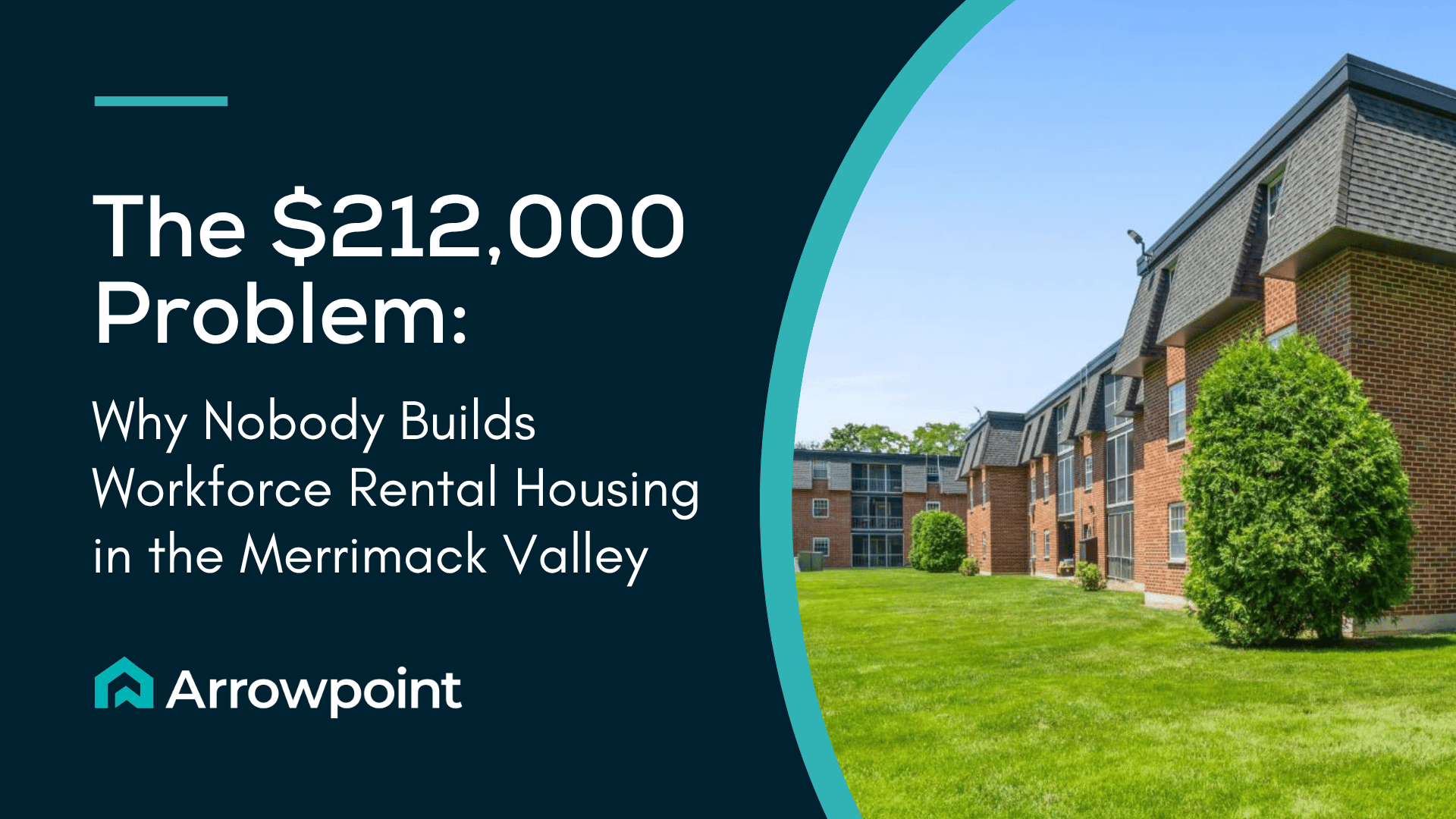
One of the first things Dave Lamattina tells a new investor is this: we are not deal junkies. Arrowpoint Properties targets two to three acquisitions a year in a market where deal flow is thin and most of what comes to market is not the right fit. That pace is deliberate. It reflects a conviction that the quality of each deal matters more than the volume, and that chasing deal flow to generate fees is exactly how sponsors get into trouble - and take their investors with them.
Key Takeaways
- Two to three deals a year is the target, not a limitation. Deal flow in the Merrimack Valley is thin by design - owners hold, and the ones who sell often have assets that do not fit the Arrowpoint profile. Selectivity is the point.
- Arrowpoint invests in every deal it brings to investors. Skin in the game is not a talking point. If the deal does not make sense for Dave's own capital, it does not get offered to investors.
- Concentration beats diversification across markets. Sponsors with high deal volume are usually operating across multiple markets they know less well. 22 years in one market produces knowledge that broad exposure cannot replicate.
- The relationship is built on repeat performance, not deal frequency. Investors who have been with Arrowpoint for 10 years have been in multiple deals - but not because of volume. Because each deal performed.
- Reputation is the real alignment mechanism. If Arrowpoint underperforms, the people who referred their colleagues and family members into deals have to answer for that. Dave is aware of that responsibility every time capital is wired.
We invest in all our deals. We want the best for our investors and partners, obviously, and if they make money, we make money. It's really a quality over quantity type of scenario. We don't care about doing a ton. We're happy doing two or three a year. - Dave Lamattina, Founder and CEO, Arrowpoint Properties
Subscribe to our educational newsletter and join the priority waitlist for our next offering
What Dave Actually Says on the First Call
When a new investor comes to Arrowpoint for the first time, Dave walks them through the background of the firm, the types of deals done historically, how Arrowpoint approaches acquisitions, and what assets it is currently targeting. Then he says something most sponsors do not: do not expect a lot of deals from us.
That is simply a description of how the business works. The Merrimack Valley - the cluster of cities and towns along the Massachusetts-New Hampshire border where Arrowpoint has operated for 22 years - does not produce abundant deal flow. Owners in this market tend to hold. When properties do come to market, many are Class A assets outside the workforce housing profile that Arrowpoint knows best, or they are priced in a way that does not pencil for the return targets investors expect.
The result is a deliberate pace: two to three deals a year when conditions are right, fewer when they are not. Dave is explicit with new investors that this is the model, and that investors looking for a sponsor generating a deal every month should probably look elsewhere.
Why Deal Volume and Deal Quality Run in Opposite Directions
The sponsors who close a high volume of deals are almost always operating across multiple markets simultaneously. Geographic breadth is how you generate volume - you source in Texas, Florida, the Carolinas, and New England at the same time, and you always have something to offer.
The problem is that operating across markets you know less well introduces risk that concentrated operators do not carry. You do not know what renovation costs in a market where you have done two deals. You do not know the tenant profile, the submarket vacancy dynamics, or what a building is actually worth before the broker tells you. You are, in effect, relying on the underwriting rather than on experience - and underwriting is only as good as the assumptions behind it.
Dave's response when investors push back on deal frequency is consistent: those sponsors are spread across markets they do not know as well. Arrowpoint knows its market cold. Every property is within 30 minutes of the Lawrence office. Dave can walk a maintenance issue the same day. He knows what a building should cost before the offering memorandum arrives. That knowledge is the product of 22 years of staying in one place, and remains strong with geographical focus.
Skin in the Game Is Not a Talking Point
Dave invests his own capital in each syndication alongside the LP group.
The alignment this creates is straightforward: if the deal underperforms, Dave loses money alongside his investors. The fee income - acquisition fees, asset management fees - does not compensate for a deal that goes sideways. That shared exposure is what makes the selectivity rational. Closing a deal that does not meet the return threshold generates fees for the sponsor and losses for the LP group. Declining it costs the sponsor those fees and preserves the relationship.
The other alignment mechanism that fee income cannot replicate is reputation. Arrowpoint's investor base has been built entirely through referrals over 22 years. There has been no advertising, no paid deal promotion, no cold outreach. Every investor came through someone who had already been in a deal. If the deals stop performing, the referrals stop, and the business stops. That consequence - not any contractual alignment clause - is what keeps the focus on deal quality over deal volume.
What Two to Three Deals a Year Actually Means for Investors
Investors who want to deploy capital frequently across many syndications are not well-served by Arrowpoint's model. That is worth saying directly. If the priority is to put money to work on a regular cadence across a large number of deals, a sponsor with higher volume and broader geographic reach is the better fit.
The investors who have stayed with Arrowpoint for decades have accepted a different trade-off: fewer opportunities, but each one selected from a position of deep market knowledge, underwritten conservatively, and managed by the same team that has never lost investor capital across 26 syndications. The 32% average net IRR and 2.50x equity multiple across realized deals are the output of that approach.
Those investors typically come back for the next deal. Many refer colleagues and family members. The referral is the strongest endorsement available in private real estate - someone putting their own relationships behind a sponsor's track record. That network, built one deal at a time over two decades, is what Arrowpoint means when it describes quality over quantity. The full picture of what the LP relationship looks like in practice is in The LP Relationship at Arrowpoint.
Frequently Asked Questions
How many deals does Arrowpoint typically close in a year?
Two to three is the target in a normal year. Deal flow in the Merrimack Valley is not abundant - owners in this market tend to hold, and what comes to market does not always fit the Arrowpoint profile. In years where the right deals do not appear at the right price, Arrowpoint does fewer. The pace is driven by what is available and what pencils, not by a target number of closings.
Does Arrowpoint invest its own capital in every deal?
Yes. Dave invests alongside the LP group in every syndication. The amount varies by deal, but co-investment is consistent across the portfolio. If Dave would not put his own capital in the deal, it does not get offered to investors.
How does Arrowpoint source deals if it is not doing a high volume?
Primarily through broker relationships built over 22 years in the same market. The same brokers who brought River's Edge in 2016 brought Allura in 2025. Long-term broker relationships produce off-market and early-market access that sponsors without local presence and track record do not get. Arrowpoint has also acquired properties directly from owners who were not actively selling - through letters and direct outreach - going back to the firm's first deal in 2009.
If Arrowpoint does fewer deals, how does an investor build a meaningful position?
The investors who have built meaningful positions with Arrowpoint have done it over time - investing in two, three, or four deals across multiple years. Some have used the fund structure, which spread a single commitment across multiple acquisitions within a four-year investment period. For investors who want to invest in multiple deals quickly with a single manager, Arrowpoint's pace may not fit. That is worth knowing before committing.
Learn More
For more on how Arrowpoint evaluates and underwrites acquisitions, see How We Underwrite Multifamily Deals. For context on the market where every Arrowpoint deal is sourced, see The Merrimack Valley Investment Thesis.

David Lamattina
President & CEO
About Dave Lamattina
Dave Lamattina is the founder and CEO of Arrowpoint Properties, a vertically integrated multifamily owner-operator based in Lawrence, Massachusetts. He has been acquiring and operating multifamily assets in the Merrimack Valley for over 22 years, with 1,100+ units acquired and exited and a current portfolio of approximately 850 units valued at around $230 million. Arrowpoint has completed 26 syndications with an average net IRR of 32% and a 2.50x equity multiple.