A Property Condition Report (PCR) is a third-party commercial inspection that documents the age and condition of a building's major systems, flags deferred maintenance, and produces a capital expenditure schedule. It is one of the most useful tools in multifamily due diligence. It also misses things. Water intrusion in subgrade units does not show up on a visual walkthrough. HVAC in common areas that a property manager has been working around for years does not appear in a PCR if no one interviews the right person. Over 26 acquisitions in older workforce housing, Arrowpoint Properties has learned to treat the PCR as a starting point and to budget for what it will not catch.
Key Takeaways
- PCRs are useful but not complete. A commercial inspection is not invasive. Inspectors are not digging up the ground or pressure-testing every system. Things get missed on every acquisition - experienced operators build that assumption into their underwriting.
- Two specific examples illustrate the gap. A drainage problem discovered post-closing after water intrusion appeared in subgrade units cost over $50,000 that had not been budgeted. At Elora, HVAC serving common areas and the management office was discovered to be non-functioning after the due diligence period had closed - information that came from an interview with the property manager, not from the PCR.
- Sellers sometimes know and don't say. On the Elora situation, management was aware of the HVAC problem and had chosen not to fix it. When Arrowpoint went back after the due diligence period had passed, there was no recourse. That is the risk.
- Capital triage is a permanent operating discipline on older buildings. No-choice items - heating, cooling, health code violations - get addressed regardless of cash flow pressure. Everything else gets evaluated. On aging assets where costs are rising and cash flow is tight, that triage is a real and ongoing management challenge.
- Arrowpoint has never done a capital call. Across 26 acquisitions of older workforce housing, the combination of conservative reserve budgeting and 20 years of familiarity with the failure patterns of this building type has kept unexpected costs inside the deal.
Dave Lamattina has been acquiring 1960s and 70s vintage multifamily in the Merrimack Valley for over 22 years. The capital planning discipline described here was not built in a classroom - it was built through repeated experience with what these buildings actually cost to own over time, and with what inspectors reliably miss. Arrowpoint has never issued a capital call across 26 syndications - the result of the Class B/C operating discipline behind every deal.
Subscribe to our educational newsletter and join the priority waitlist for our next offering
What a PCR Is and What It Isn't
When Arrowpoint acquires a property, a full Property Condition Report is standard. A third-party firm walks the building and grounds, inspects major systems - roof, mechanicals, structural elements, windows, common areas - and produces a report that documents the age and condition of each component, flags items needing attention, and projects a capital expenditure schedule for the hold period. It is a serious professional document.
It is also a visual, non-invasive assessment conducted over a limited number of hours by someone who has not lived with the building. It cannot see what is underground. It cannot identify what has been deliberately concealed. It does not interview the property manager who has been rolling portable air conditioners into the hallways every summer. There is no version of a commercial inspection that catches everything.
There is always going to be stuff that gets missed. That is not a criticism of PCRs - it is an operating assumption that experienced owners build into their capital planning from the start.
The Drainage Problem: What the Ground Was Hiding
On one acquisition, after closing, water intrusion appeared in units at the ground level - partially subgrade units where the grade around the building brought moisture toward the foundation. The issue had not been present, or had not been visible, when the inspection was conducted. The PCR had not flagged it.
When Arrowpoint brought in a specialist, the diagnosis was a failed perimeter drainage system. The fix required trenching around the building's exterior and installing a new drain system. The cost came to around $50,000. None of this had been in the budget, other than in the ‘reserves’ line item, and the reason why we always budget for the unexpected.
That is the category of surprise this article is about. Not a maintenance item that got deferred. Not a system at end of life that should have been caught. A physical condition that a standard inspection process is not designed to find, because finding it would require digging up the ground around the building.
The Elora HVAC Discovery: When the Seller Knows
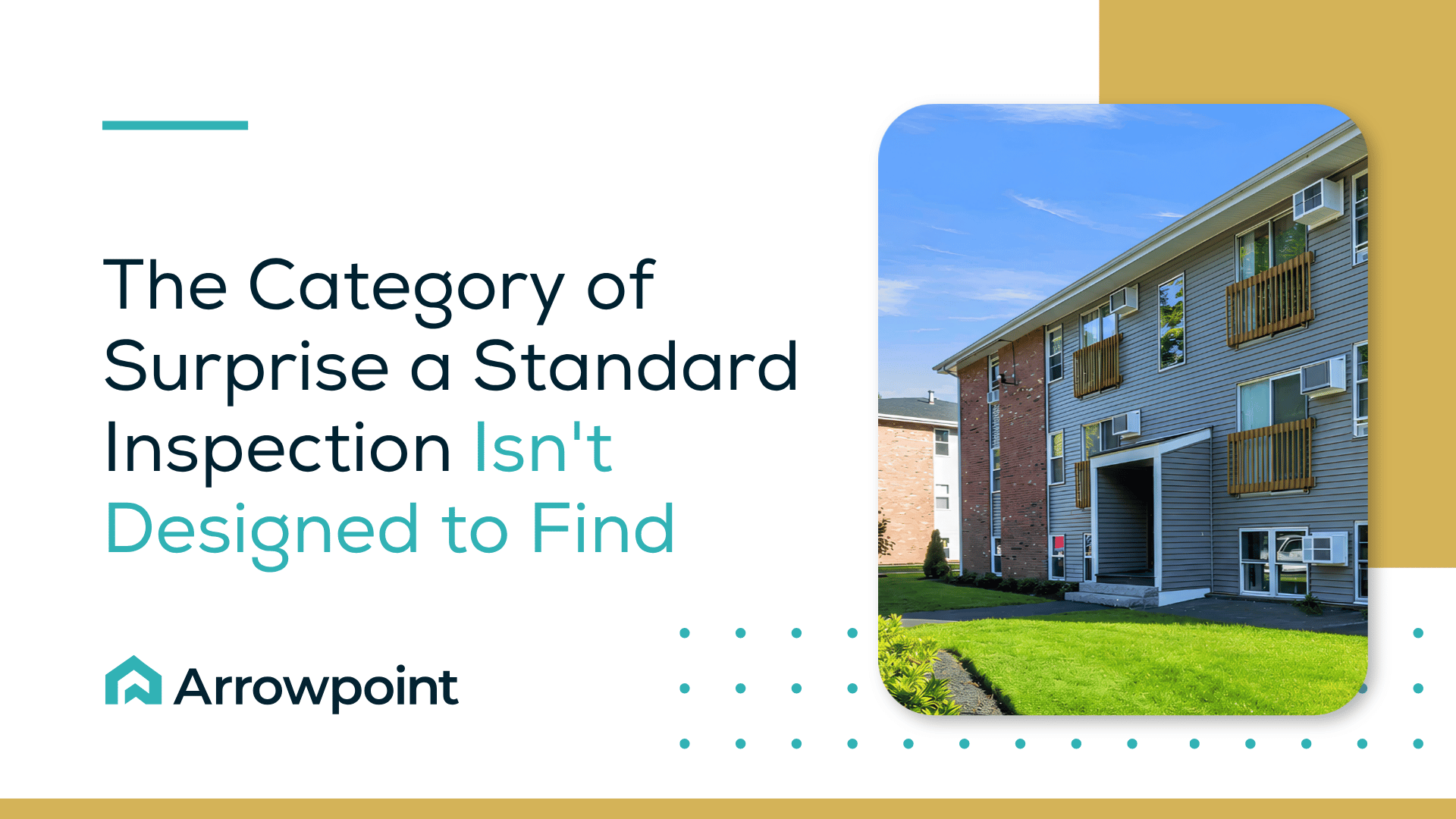
The Elora acquisition presented a different version of the same problem. The building was 2009 construction - relatively new by Arrowpoint's standards - and the PCR came back broadly clean. Most systems were in good shape as expected for a building of that vintage.
After the due diligence period had closed, Arrowpoint's regional manager was interviewing the current property manager as part of the transition process. The property manager mentioned, in the course of that conversation, that the HVAC serving the common areas and her office had been non-functional. In summer, she had been using portable air conditioners. She described it as embarrassing during showings. Management had known about it and had not fixed it.
When Arrowpoint went back to the seller, the response was that the problem had existed when they bought the property and they were not going to do anything about it. The due diligence period had passed. There was no recourse.
The HVAC issue now belongs to Arrowpoint to assess and resolve. The extent of the problem - whether it is a component failure or something more structural like missing or damaged ductwork in the affected sections - is still being evaluated. Whatever the scope turns out to be, the cost was not anticipated and was not in the budget.
What the Elora situation illustrates is a different failure mode from the drainage problem. The drainage issue was genuinely hidden. The HVAC situation was known to the seller and not disclosed. Both end up in the same place for the buyer: an unbudgeted cost discovered after closing with no recourse available.
Managing Capital on Aging Buildings
The PCR surprises are the dramatic version of a quieter ongoing challenge: aging buildings cost more to maintain as they get older, and the cost of everything - labor, materials - has gone up significantly. There is only so much cash flow that can cover capital needs in a given period, which means operators have to make choices about what gets done and what waits.
Arrowpoint's framework for that decision is straightforward. There are no-choice items and there are everything else items.
No-choice items are things that cannot wait: a tenant without heat or cooling, a health code violation, a Board of Health citation. If an HVAC unit fails in a Massachusetts winter, it gets replaced - ASAP, regardless of where the budget stands. If something creates a habitability issue or a code exposure, it gets addressed. The money comes from somewhere, because the alternative is worse on every dimension - legal exposure, tenant relations, regulatory risk.
Everything else gets evaluated. How urgent is it actually? What does it cost to defer six months versus addressing it now? Is there a lower-cost interim solution that buys time? Those questions get asked and answered based on the specific situation and the cash flow position of the asset at that moment.
This is an active challenge on at least one property in the portfolio (at time of writing) - a building that has been held for several years, is starting to show its age in multiple systems simultaneously, and has cash flow that is already tight. The no-choice items will get addressed. The question of how to sequence and fund the rest is a real management challenge and one that we have become used to over 22-years of operating apartment buildings.
Twenty-Six Deals, No Capital Calls
The track record on this is worth stating clearly. Arrowpoint has acquired older workforce housing across 26 syndications. These are 1960s and 70s vintage buildings in a cold-weather market that requires heating systems to work and roofs that hold. Surprises happen. The drainage problem happened. Costs come in above budget.
A capital call has never been issued.
Two things explain why. The first is conservative reserve budgeting from the start. When Arrowpoint underwrites a building of this vintage, the capital assumptions account not just for the items the PCR flags but for the category of things that won't be caught. There is a bucket in every pro forma for what you don't know you don't know - sized based on 20-plus years of experience with what these buildings actually produce in the way of surprise costs.
The second is familiarity. Knowing the failure patterns of 1960s and 70s construction in the Merrimack Valley climate - which systems tend to go at what point in their lifespan, what drainage problems look like in these soil conditions, how much a roof replacement on a building of this type and size typically costs - produces better reserve estimates than any formula. That knowledge was not available at deal one. It has been refined across every deal since.
For more on how Arrowpoint underwrites older buildings, see How to Underwrite a Multifamily Deal. For the Worcester before-and-after case study that includes the drainage discovery, see One Step Away From Condemned.
Frequently Asked Questions
What is a Property Condition Report and what does it cover?
A PCR is a third-party commercial property inspection that documents the condition and remaining useful life of a building's major components - roof, structure, exterior systems, mechanical, electrical, plumbing, common areas, and site features. The inspector produces a written report with capital expenditure projections for each component over a standard hold period. PCRs are standard in commercial real estate acquisitions and required by most lenders. They are a professional assessment, not a guarantee. They are conducted visually and non-invasively, which means underground conditions, concealed systems, and issues that require operational knowledge of the building to identify can and do get missed.
What recourse does a buyer have when a seller knows about a problem and doesn't disclose it?
In most cases, limited recourse. Once the due diligence period closes, the buyer's ability to go back to the seller over newly discovered conditions depends on what the purchase agreement says and what can be proven about the seller's knowledge. The Elora situation - where the prior management acknowledged knowing about the HVAC problem and choosing not to fix it - produced no available recourse because the due diligence period had passed. The practical lesson is that interviewing the on-site property manager before the due diligence period closes is worth doing explicitly, and asking direct questions about known issues is part of that conversation.
How does Arrowpoint size capital reserves when underwriting older buildings?
The starting point is what the PCR produces - its capital expenditure schedule over the projected hold period. From there, Arrowpoint adds a budget for items the PCR is unlikely to catch, sized based on experience with similar vintage buildings in similar conditions. The exact figure varies by property, condition, and hold period, but the principle is consistent: there will be something post-closing that nobody found, and the budget needs to absorb it without triggering a capital call. Twenty-six deals without a capital call is the evidence that the approach works.
At what point does a capital issue become serious enough to threaten a deal's returns?
When unexpected capital costs arrive on a property that is already operating with tight cash flow, the pressure is real. The no-choice items get funded regardless - health and safety issues, heating and cooling failures, code violations. The question is what happens to the rest of the capital plan when an unbudgeted cost has to be absorbed. On a well-reserved deal, a single surprise gets absorbed without changing the return picture materially. When multiple systems hit replacement simultaneously on a building with limited cash flow, it becomes a sequencing and prioritization problem that requires active management rather than a formula.
For an overview of how Arrowpoint manages operations across its Class B/C portfolio, see Class B/C Multifamily Operations. For Arrowpoint's track record and investor relationship model, see No Capital Loss Across 26 Syndications.

David Lamattina
President & CEO
About Dave Lamattina
Dave Lamattina is the founder and CEO of Arrowpoint Properties, a vertically integrated multifamily owner-operator based in Lawrence, Massachusetts. He has been acquiring and operating multifamily assets in the Merrimack Valley for over 22 years, with 1,100+ units acquired and exited and a current portfolio of approximately 850 units valued at around $230 million. Arrowpoint has completed 26 syndications with an average net IRR of 32% and a 2.50x equity multiple.