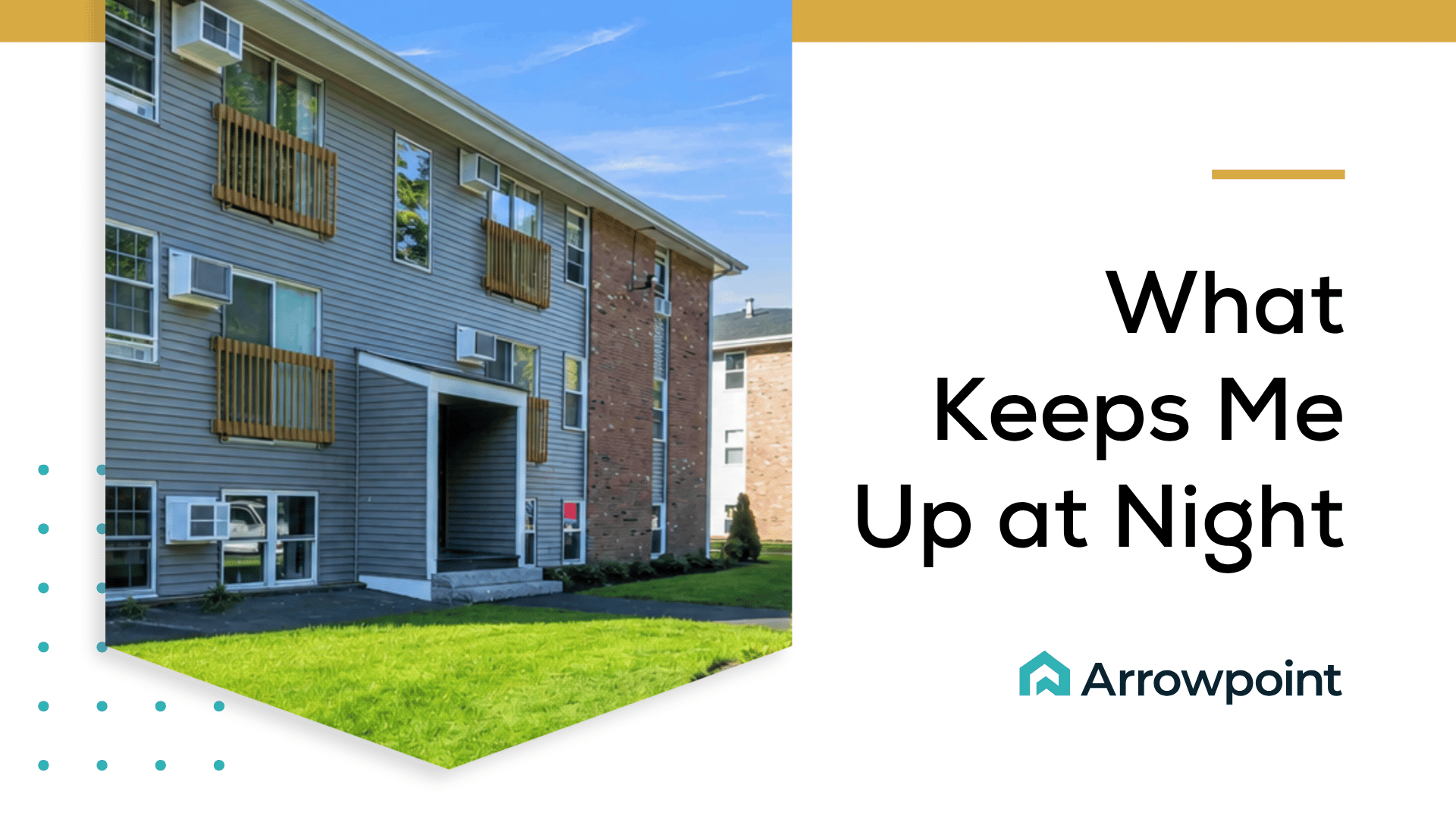
Merrimack Valley multifamily investing offers accredited investors access to a supply-constrained, high-demand rental market that Greater Boston institutional capital has largely overlooked. The region - spanning Lawrence, Methuen, Haverhill, and roughly three dozen cities and towns along the Massachusetts-New Hampshire border - has produced consistent rent growth, sub-2% vacancy in core submarkets, and a workforce renter base that generates durable long-term occupancy.
Key Takeaways
- Vacancy in Lawrence sits at approximately 1.4% - well below the 7.4% threshold considered stable, meaning landlords in this market are not competing for tenants.
- The Merrimack Valley is structurally undersupplied and getting more so - new construction is expensive, approvals take years, and available land is limited. The housing deficit is not a temporary condition.
- Working-class renters are renters for life - the tenant profile in this market does not use Class B/C apartments as a stepping stone before buying a home. Turnover is lower, and occupancy is more predictable than in Class A.
- The market sits close enough to Boston to benefit from its economic gravity - healthcare, higher education, technology, and manufacturing drive regional employment - but land and acquisition prices are materially lower than inner-ring suburbs.
- Institutional capital has not yet crowded this market - the $5M-$30M acquisition tier where we operate is still dominated by local operators who know the submarkets. That is changing.
- Rent growth in Lawrence and Haverhill has outpaced the Greater Boston average - the Lawrence/Haverhill submarket recorded 4-5% rent growth recently, among the highest in the region.
- Southern New Hampshire is the logical extension of this thesis - no income tax, no rent control, strong population growth, and institutional capital arriving ahead of the crowd.
Why I Have Spent 22 Years in This Market
I bought my first property in Lawrence in 2004. A four-family, nothing special. I didn't know what I was doing. I learned by doing it - changing toilets, painting units, figuring out how to screen tenants. Over the next two decades, we acquired and exited more than 500 units across the Merrimack Valley, with a current portfolio of roughly 850 units and $230 million in asset value.
I still haven't left.
That is not inertia. Every few years someone pitches me on the Sun Belt - Atlanta, Dallas, Phoenix - markets where land is flat and plentiful and the acquisition pipeline feels endless. I understand the appeal. I also understand that I know nothing about those markets. I don't know the brokers, the tenants, the submarkets, the contractors, the inspectors, or the political environment. I know this market. I know what a building across all our markets should trade at. I know which blocks are improving and which aren't. I know the tenant profile well enough to underwrite collections risk accurately.
That local knowledge - built over 22 years in the same market, same office, same streets - is not a soft advantage. It shows up in returns.
We have gone full cycle on 13 deals across the Merrimack Valley and greater Worcester, with exit value totaling roughly $95 million. Average net IRR across 26 syndications has been 32%, with a 2.50x equity multiple. Those numbers come from operator-level knowledge of one geographic area, not from chasing volume across multiple markets.
Subscribe to our educational newsletter and join the priority waitlist for our next offering
What the Merrimack Valley Actually Is
The Merrimack Valley is a region of approximately 36 cities and towns along the Merrimack River, straddling the Massachusetts-New Hampshire border. The core Massachusetts cities for our portfolio are Lawrence, Methuen, and Haverhill. The southern New Hampshire border communities - including Bedford, Salem, and Manchester - are now part of our acquisition focus as well.
This is not a monolithic market. Each city has its own demographics, rental pricing, tenant profile, and regulatory environment. Lawrence, where our corporate office is located, is heavily working-class with a large immigrant population. According to U.S. Census Bureau data, approximately 70-71% of Lawrence households are renter-occupied - one of the highest rates in Massachusetts. Haverhill, by contrast, has a higher median household income of approximately $88,000 and has seen two-bedroom rents nearly double over the past seven years, rising from roughly $1,340 to approximately $2,537 per month according to local market data.
Methuen sits between them - suburban, mixed blue-collar and white-collar, with year-over-year rent growth running around 5.66% and roughly one-third of residents cost-burdened.
What these cities share is the same structural condition: demand for rental housing that consistently outpaces supply.
The Supply Problem Is Structural, Not Cyclical
People talk about the housing shortage in Massachusetts as if it will eventually be solved. It will not be solved in any timeframe relevant to an investment thesis.
The barriers to new supply in this region are layered and largely permanent.
Land scarcity. This is not Florida. You cannot drive 20 minutes outside of Lawrence and find flat, buildable land in every direction. The Merrimack Valley is a mature, built-out region. Parcels large enough to develop are scarce, and the ones that exist are rarely straightforward.
Regulatory friction. Getting a multifamily project approved in Massachusetts takes years. Not months - years. Projects that clear one hurdle often face appeals, environmental review, and community opposition at the next. Developers who started that process during the last rate cycle are delivering into today's market with cost structures that don't pencil. New entrants are not rushing to start that process now.
Construction economics. The cost to build in New England is prohibitive. Labor, materials, permitting, and carrying costs during a multi-year approval process push construction costs to levels that require rents the market will not support in working-class submarkets - which is why almost no new workforce housing gets built in the Merrimack Valley.
According to the MassINC Gateway Cities Housing Monitor, Lawrence alone needs an estimated 4,085 additional units by 2032 to meet projected household growth of 12.6%. The political will to clear the obstacles to that supply does not match the rhetoric about the need for it.
Operators who own existing stock in this market sit in an increasingly defensible position as demand grows and supply does not.
The Workforce Renter Thesis
Class A multifamily gets most of the attention in investor presentations. It photographs well, it attracts institutional capital, and it feels safer to investors who live in Class A themselves.
The workforce housing thesis is different, and in this market, it is more durable.
Workforce renters - our Class B and C tenant base - are, in this market, renters for life. A couple that just got married might spend a year in a luxury apartment before buying a house. That dynamic creates turnover. The working-class renter in Lawrence or Methuen is not using our apartment as a temporary stop. They are home. They renew. They refer their relatives. Their occupancy is sticky in a way that produces more predictable cash flow over a hold period.
Class B/C is more management-intensive than Class A. Collections require active oversight, particularly in a post-pandemic environment where state assistance programs have created mixed incentives among some tenants. The 98% occupancy we run across our Merrimack Valley portfolio is a product of vertical integration and hands-on local management - and that is precisely why operator quality matters more in this asset class than in Class A. Get the management right and the numbers follow. Get it wrong and they don’t.
The economic case, for operators who execute well, is straightforward: lower turnover, lower amenity expectations, and a tenant base with no intention of leaving. According to Matthews Real Estate Investment Services, Greater Boston Class A vacancy has risen to 6.2% as luxury supply delivered into concession territory. Workforce housing vacancy in our core markets runs materially below that and has done so consistently through multiple cycles.
What the Numbers Look Like
The Merrimack Valley does not produce the headline rents of downtown Boston or Cambridge. That is exactly the point.
Average asking rents in Lawrence range from approximately $1,795 for a studio to $2,552 for a two-bedroom as of recent data. Methuen runs around $2,200 per month. Haverhill's Bradford submarket, where our South Grove property is located, has seen the sharpest appreciation in the region over the past seven years.
On the acquisition side, we have been active buyers at prices ranging from $143,000 per unit (Wood Crest in Lowell, acquired 2021) to $302,500 per unit (South Grove in Haverhill, acquired 2025), with the per-unit cost reflecting both vintage and submarket quality.
Cap rates in the Worcester suburban B/C segment - our secondary market - run approximately 5.38% stabilized, with value-add acquisitions pricing around 6.77%, implying roughly 140 basis points of spread for execution risk. The Merrimack Valley core markets are tighter than Worcester but still offer 150-200 basis points of premium over Greater Boston, according to local market analysis.
These are not distressed-entry numbers. We are buying into a market with a structural supply deficit, a durable tenant base, and a regulatory environment that - whatever its frustrations - keeps new competition from building around existing stock.
The Southern New Hampshire Extension
In February 2026, we closed on The Meridian at Bedford - 85 units in Bedford, New Hampshire, at $24.05 million. Northmarq, which arranged the financing and sale, described the per-unit price of $282,900 as a record for sub-200-unit multifamily transactions in the Southern New Hampshire market.
We paid a record price deliberately.
Bedford is a high-income suburb of Manchester with average rents of approximately $2,215-$2,515 per month and year-over-year rent growth of approximately 4.9%. New Hampshire has no state income tax, no state sales tax, and no rent control at any level of government. The regulatory environment for landlords is materially more favorable than Massachusetts.
The Massachusetts rent control ballot initiative - which would cap annual rent increases at the lower of CPI or 5%, and which applies to new lease-ups as well as renewals - has 62.6% voter support in current polling according to a Suffolk University/Boston Globe survey. That is a real risk to value-add return profiles on Massachusetts stock, and we think about it seriously.
Our Massachusetts value-add programs are substantially complete. The renovation spend is done, the rents are in place, and we have not been underwriting to aggressive rent growth assumptions in the current environment. We are directing new acquisition capital toward Bedford-type opportunities - an implied 5.0-5.5% cap rate, no rent control exposure, no income tax drag, and institutional capital arriving in a market that still has room to run.
Southern New Hampshire is the logical next chapter of the same thesis: workforce and middle-market housing in a supply-constrained region where we have established relationships and local knowledge.
What Rent Control Would Actually Do to This Market
The Massachusetts ballot initiative deserves a plain-language explanation for investors evaluating this region.
In its current form, the proposal would cap any rent increase to the lesser of 5% or CPI. CPI right now runs roughly 2.5-3.5%, so that is the effective ceiling. The cap applies not just to renewals but to new lease-ups as well - meaning if a tenant vacates a unit that was rented below market for 20 years, the landlord cannot price the renovated unit at market. The increase is limited to CPI over the prior rent, regardless of what was spent on renovation.
The economic logic of value-add multifamily is that you spend $15,000-$20,000 renovating a unit and recover that investment through a rent premium. If the premium is capped at 3% over a below-market base rent, the renovation math breaks down. No rational operator spends $20,000 to recover it over 40 years. The result is deferred maintenance and reduced effective housing supply - which makes the shortage worse, not better.
For deals we are evaluating in Massachusetts today, we underwrite to in-place rents with 2-2.5% annual growth and no renovation premium. A 200-plus-unit value-add property near our office is being bid that way right now. The number we can pay is 20-25% below seller expectations. That spread reflects the market's current pricing of regulatory uncertainty - before the ballot has even been voted on.
Investors who understand this dynamic and partner with operators who have already executed their value-add programs are in a structurally better position than those who would be starting that process in a rent-controlled environment.
Why Local Matters in This Market
The Merrimack Valley is not a market where you underwrite from a spreadsheet in another city. The differences between a block in Lawrence and a block five minutes away are real. The difference between a 1970s brick complex with compromised cantilever decks and the same vintage in sound structural condition is something you learn by walking properties for 22 years, not from a Property Condition Report - there’s plenty a standard inspection won’t find.
Every asset we own is within 30 minutes of our office in Lawrence - with the exception of our Worcester portfolio, which runs about an hour. That proximity is a competitive advantage. When something comes up at a property, I can be there quickly. I know the brokers, the inspectors, the contractors, the local lenders. I know when a seller is realistic and when they are testing the market.
That density of local knowledge is what has produced 22 years of continuous operation in one geography without a capital call.
Frequently Asked Questions
What makes the Merrimack Valley different from other secondary Massachusetts markets?
The combination of factors is unusual. Lawrence has a 70% renter-occupancy rate and vacancy around 1.4% - a structural undersupply not present in most secondary markets. Haverhill has seen two-bedroom rents nearly double over seven years. The entire region benefits from Boston's employment base - healthcare, education, technology, manufacturing - without Boston's land costs or cap rate compression. The regulatory environment is difficult which frustrates operators but also suppresses competitive new supply.
How does the rent control ballot affect how you are underwriting deals today?
We underwrite Massachusetts acquisitions to in-place rents with 2-2.5% annual growth and no renovation premium built in. That is the conservative case, and it is also how we think the market needs to be approached until there is rent-control clarity in November 2026. The key question for any investor evaluating a Massachusetts deal is whether the sponsor's business plan depends on renovation-driven rent increases that a rent cap would prevent. On our existing holdings, it does not - we completed those programs ahead of the vote.
How does the workforce housing tenant base affect returns compared to Class A?
Lower turnover is the primary financial advantage. Every time a Class A unit turns, you absorb a lease-up period, concessions, and make-ready costs. Workforce tenants renew at higher rates and stay longer. The offset is management intensity - collections oversight, state assistance compliance, and higher day-to-day maintenance requirements. For operators who have managed this profile for years and built internal infrastructure to handle it, the result is more stable cash flow over a hold period than Class A in today's oversupplied luxury segment.
What is a realistic return expectation for Merrimack Valley multifamily today?
We target 70-75% LTV, non-recourse financing, with 5-7 year fixed-rate debt. Conservative acquisition pricing - buying to in-place income rather than projected renovation upside - produces deals that can generate meaningful cash-on-cash yield in year one and realistic appreciation over a 5-7 year hold. We tell investors what they can reasonably expect and build the business plan around that number, not around what we need the number to be to close the deal.
What does Arrowpoint look for in an acquisition today?
Post-2000 construction, ideally the last 10-15 years, where the physical lift is lighter, the tenant base is more stable, and the first-year cash flow does not require a 24-month renovation program to materialize. We still look at older value-add deals when the price reflects the execution risk. What has shifted is the investor community's preference - they want cash flow from year one and a lower-risk profile - and we are buying accordingly.

David Lamattina
President & CEO
About Dave Lamattina
Dave Lamattina is the founder and CEO of Arrowpoint Properties, a vertically integrated multifamily owner-operator based in Lawrence, Massachusetts. He has been acquiring and operating multifamily assets in the Merrimack Valley for over 22 years, with 1,100+ units acquired and exited and a current portfolio of approximately 850 units valued at around $230 million. Arrowpoint has completed 26 syndications with an average net IRR of 32% and a 2.50x equity multiple.