Most real estate syndicators learn the capital side first and the operating side later - often by hiring someone else to manage the asset. Arrowpoint President and CEO, Dave Lamattina, did it the other way. Before he raised a dollar of outside capital, he had already owned and self-managed a multifamily property for five years, doing the maintenance himself, learning leasing from scratch, and figuring out the accounting through trial and error. That sequence - operator before syndicator - is the foundation of everything Arrowpoint Properties does differently.
Key Takeaways
- Operational knowledge was built before investor relationships. Dave started with a four-family building in 2004, managed it himself for years without outside capital, and did not raise his first syndication until 2009 - after he already understood every function of the business.
- No third-party management, ever. Arrowpoint has managed its own properties from the beginning. Leasing, maintenance, accounting, and legal compliance all run in-house. This approach is a conviction about where the business is actually won or lost.
- Staying power is the primary competitive advantage. Dick Goldberg, Dave's mentor, put it plainly: the operators who survive downturns are the ones who can last. Conservative debt, conservative underwriting, and in-house operations create the conditions for staying power. Third-party management does not.
- The first investor was his father. Dave had to talk his father into it. His father did not understand real estate and was reluctant. Dave made the case on returns and alignment. His father invested, came back for more, and that pattern - reluctant first-timers who become repeat investors - has defined the investor base ever since.
- Learning every function of the business has direct financial consequences. An operator who has personally handled maintenance calls, processed lease applications, sat through eviction hearings, and closed the books at month-end makes different decisions on capital and staffing than one who has only ever read about those functions.
Dave Lamattina founded Arrowpoint Properties after five years of managing a multifamily property himself with no outside investors, no property management firm, and no training beyond what he taught himself.
By the time he raised his first syndication in 2009, he had already answered maintenance calls on nights and weekends, learned the Lawrence, Massachusetts housing court system firsthand, and figured out what it actually costs to keep an older building in competitive condition. Arrowpoint has completed 26 syndications since, averaging a 32% net IRR and a 2.50x equity multiple with no loss of investor capital. You can read more about Arrowpoint Properties and its leadership.
Subscribe to our educational newsletter and join the priority waitlist for our next offering
2004: A Four-Family Building and No One to Ask
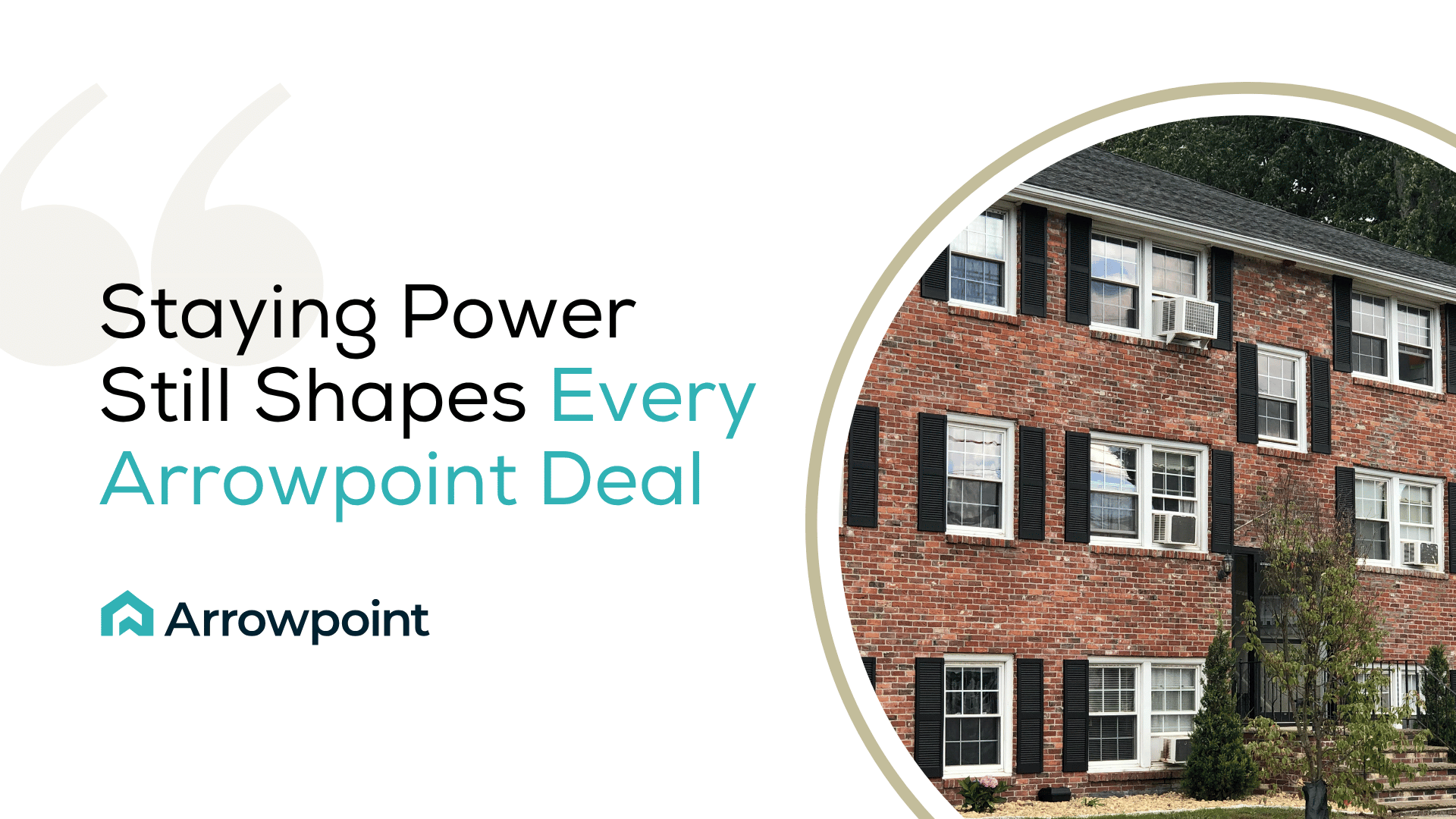
Dave Lamattina bought his first property in 2004. It was a four-family in Lawrence, Massachusetts, close to where the Arrowpoint corporate office now sits. He borrowed money from his father to close. He had no formal training in property management and no mentor in the building. What he had was a building with tenants in it and a set of problems he needed to solve.
He solved them himself. Toilets, faucets, basic plumbing - he learned by doing. He painted. He handled maintenance calls. He dealt with lease renewals. When something broke at an inconvenient hour, he was the person who answered. When a tenant did not pay, he was the one who had to figure out what to do next.
That period of self-teaching lasted roughly five years. By the end of it, he understood the economics of multifamily from the inside - not from a pro forma, but from the experience of receiving rent, paying expenses, managing repairs, and watching what happens to cash flow when a unit sits vacant too long.
It was not elegant. He made mistakes. He describes those years as trial and error - a lot of sweat equity, a lot of learning the hard way. But by the time he decided he wanted to scale into syndications, he was not starting from zero on operations. He already knew the business.
2008: Deciding to Scale - Into the Worst Possible Market
Around 2008, while still working in his father's restaurant and soup manufacturing business, Dave made the decision to commit to real estate full time. He had been managing the Lawrence four-family for several years and knew what he wanted to do. What he did not have was enough capital to scale on his own.
He spent weekends at Barnes and Noble working through every real estate book he could find, specifically studying how private equity structures and syndications were put together. When he felt he understood the model well enough to execute it, he went looking for his first deal.
The timing was spectacularly bad on paper. The financial crisis of 2008 and 2009 had crushed values, frozen lending, and driven most would-be buyers to the sidelines. Dave saw it differently. The same conditions that scared away buyers created opportunities in the specific market he knew - older workforce multifamily in Lawrence and the surrounding Merrimack Valley.
In 2009, he bought a building right around the corner from his original four-family. He brought his father in as the first outside investor. His father did not know real estate and was skeptical. Dave made the case: good asset, predictable cash flow, all the work would be handled by Arrowpoint. His father invested. It worked out well enough that he invested again - and kept investing.
That pattern became the template. Word of mouth from satisfied investors. Referrals to colleagues and family members. No advertising. No formal fundraising operation. A track record that spoke for itself and a founder who answered his own phone.
The Mentor, the Blizzard, and the Lesson That Stuck
Early in his real estate education, Dave met Dick Goldberg at a family event. Goldberg was from a well-established real estate family on the North Shore of Massachusetts - long history in multifamily and commercial, properties that had been in the family for decades.
Goldberg agreed to meet. The appointed Friday turned out to be a February blizzard. Dave got in his two-wheel drive sedan and drove to Goldberg's office anyway. Goldberg was not expecting him. The fact that he showed up - in that weather, in that car - told Goldberg something about how seriously the young man was taking the meeting.
Goldberg took Dave under his wing. They drove around in Goldberg's truck that day while Goldberg pointed out properties and named the year he had bought each one. It was an education in what long-term ownership actually looks like - not the acquisition, not the renovation, but the compounding over decades of holding good assets in a market you understand.
The lesson that stayed with Dave was the concept Goldberg called staying power. It is simple: the operators who survive downturns - who are still in the game when conditions recover - are the ones who structured their businesses to outlast bad periods. That means conservative debt. It means not being dependent on refinancing events or on rent growth assumptions that assume the market cooperates. It means holding fixed-rate, long-term agency debt so that an interest rate cycle cannot force a crisis on a property that would otherwise perform fine.
In the period following the peak of the COVID cycle, operators who ignored that lesson paid for it. Groups that had bought across multiple markets with floating-rate bridge debt, underwriting aggressive rent growth and near-certain cap rate compression, found themselves in capital calls, distressed sales, or worse. Dave watched it happen and recognized what Goldberg had been describing years earlier.
Arrowpoint stayed out of that cohort. The debt structure on every deal has been fixed-rate, agency preferred - Fannie Mae or Freddie Mac - with a minimum term of five to seven years. Leverage sits at 70-75% LTV. None of the deals have required a capital call. That discipline traces directly to what Dick Goldberg taught in the early years and what Dave internalized before he had much of a portfolio to protect.
Why Arrowpoint Has Never Used a Third-Party Property Manager
The question gets asked. Managing 850 units in-house with your own staff, your own maintenance team, your own leasing agents - why not outsource that function to a professional management firm and focus on acquisitions and investor relations?
The answer starts with the sequence. Dave did not come into real estate from the capital side and then bolt on operations. He built the operations first. He knows every function of property management because he performed those functions himself at the start. When something goes wrong at a building - a maintenance issue, a collections problem, a difficult tenant situation - he understands exactly what is happening and what it costs to fix it, because he has been the person fixing it.
That knowledge changes the economics of every decision. An operator who has personally handled a plumbing failure at 11pm on a cold night knows what it costs in labor, what the damage looks like if it is not addressed quickly, and what a tenant who was left without heat thinks of the ownership afterward. An operator who has never done that personally is making decisions based on secondhand information from the management firm - which has its own interests, its own staffing constraints, and its own portfolio of other clients competing for the same attention.
There is also the vendor relationship question. Arrowpoint has been giving work to the same painters, flooring contractors, plumbers, and HVAC technicians for years. Those relationships translate into response time, pricing, and priority when something urgent comes up. A third-party manager running multiple owners' properties negotiates those relationships on behalf of everyone simultaneously - which is not the same as a dedicated operator who has been one company's preferred contractor for a decade.
Arrowpoint uses AppFolio for property management and accounting - the platform has been in use since 2016 and handles work orders, rent collection, financial reporting, and maintenance tracking across the portfolio. The technology supports the in-house team; it does not replace the judgment and relationships that come from doing the work themselves.
What Learning Every Function of the Business Actually Means
There is a practical difference between an operator who has done leasing and one who has supervised people who do leasing.
The operator who has personally processed lease applications knows what a thin application looks like before it becomes a collections problem. The operator who has handled lease renewals under pressure - a unit that needs to stay occupied, a tenant who is asking for a concession, a market where comparable properties are offering incentives - knows how to read that situation and make a call. Leasing is not just filling vacancies. It is tenant selection, and tenant selection is the upstream decision that determines what the next five years of collections looks like on that unit.
Maintenance is similar. Dave did the maintenance himself on the Lawrence four-family because he had no choice. What came out of that period was an operational understanding of how older buildings age - which systems fail first, how deferred maintenance compounds, what the difference is between a problem that can wait a week and one that cannot wait until Monday. That understanding did not come from a contractor report. It came from being in the basement of a building in Lawrence with a wrench.
The accounting and legal knowledge matters for different reasons. Property management accounting tracks rent rolls, vacancy, make-ready costs, and operating expense across multiple units simultaneously. An owner who understands that accounting at the detail level can see cash flow problems developing before they become crises. The legal side of multifamily - eviction timelines, notice requirements, tenant rights under Massachusetts law, the difference between what the housing court will accept and what it will reject - is not information most investors ever engage with directly. Dave does, because he has been through the process enough times to know how it works and how it can go wrong.
Taken together, that operational knowledge is why Arrowpoint runs at roughly 98% occupancy in the Merrimack Valley portfolio. High occupancy on older workforce housing is not automatic. It requires tenant selection, maintenance responsiveness, curb appeal investment, and lease renewal management - all executed well, consistently, by people who know what they are doing and are held accountable by an owner who knows how to evaluate the work.
What This Means for Investors
The practical implication for LP investors is alignment of a kind that is genuinely rare in the syndication market.
When Dave puts capital into an Arrowpoint deal alongside outside investors, he is not handing the property off to a management company and checking in on the monthly report. He is the management company. His team is on-site. His relationships with vendors are being deployed. His reputation in the local market - with tenants, with contractors, with the housing court - is at stake on every property.
That is a different kind of alignment than a sponsor who collects acquisition fees and asset management fees while the third-party manager handles day-to-day operations. It produces different outcomes. Not because Dave is harder working than the average third-party property manager, but because the person making the calls on staffing, maintenance spending, lease pricing, and tenant selection is the same person who has personal financial exposure to the result.
The 26-deal track record - 32% net IRR, 2.50x equity multiple, no loss of investor capital - reflects a lot of factors. Market selection matters. Conservative underwriting matters. Debt structure matters. But underpinning all of it is an operator who built the management function himself, has kept it in-house for two decades, and understands every part of the business because he learned them the hard way before anyone else's money was involved.
For more on how Arrowpoint structures deals for outside investors, see How to Invest in Real Estate Syndications. For a closer look at the operational discipline applied to a specific acquisition, see the Worcester case study, One Step Away From Condemned. The broader framework for Class B/C operations is in Class B/C Multifamily Operations.
Frequently Asked Questions
Why does Arrowpoint manage properties in-house rather than hiring a third-party manager?
Dave Lamattina built the property management function himself before he ever raised outside capital. He learned leasing, maintenance, accounting, and the legal side of multifamily through five years of self-managing a four-family building in Lawrence. By the time Arrowpoint started syndicating deals, in-house management was already the model - not a strategic choice made later, but the foundation the business was built on. Keeping management in-house maintains direct alignment between the sponsor and the asset, and preserves the vendor relationships Arrowpoint has built over 20 years of consistent work in the same market.
What was Dave Lamattina's background before founding Arrowpoint?
Dave worked in his family's food service and soup manufacturing business after college while simultaneously buying and managing his first multifamily property on the side. Around 2008, he decided to leave the family business and commit to real estate full time. He spent that period studying syndication structures, learning everything he could about how private equity real estate deals were put together, and looking for his first opportunity to raise outside capital. His first syndication closed in 2009, with his father as the first outside investor. The five years of self-managing the Lawrence four-family before that first syndication is what made everything that followed possible.
How has Dick Goldberg's influence shaped Arrowpoint's approach?
Dick Goldberg is a long-time real estate family on the North Shore of Massachusetts who became Dave's mentor early in his career. The most enduring influence is the concept of staying power - the idea that the operators who succeed over multiple cycles are the ones who structure their businesses to outlast downturns rather than betting on conditions staying favorable. That philosophy is visible in every deal Arrowpoint has done: fixed-rate agency debt, 70-75% LTV maximum, conservative rent growth assumptions, no bridge loans, no refinancing dependencies. Jay Goldberg, Dick's son, is now Dave's operating partner at Arrowpoint.
How does learning maintenance firsthand change the way Dave runs Arrowpoint today?
An operator who has personally handled maintenance calls knows what deferred maintenance costs look like before they show up in a PCR. He knows which systems fail first on older buildings, how quickly a minor problem compounds into a major one, and what a tenant who cannot get a maintenance issue resolved decides to do at lease renewal time. Dave spent five years as the maintenance person on his first property. That experience informs capital planning decisions, reserve sizing, vendor relationships, and the standard Arrowpoint holds its maintenance team to. It also means that when a contractor tells Dave something is not possible, he often knows enough to ask a better follow-up question.
What does Arrowpoint look for in an LP investor?
Arrowpoint has built its investor base entirely through word of mouth and referrals over 22 years. Dave gives out his cell phone number. He has first calls with prospective investors to understand their goals, their timeline, and whether the deal structure is a fit for their situation. Arrowpoint is selective - not every deal is right for every investor, and not every investor is right for Arrowpoint. The track record of 26 syndications with no loss of capital reflects in part the care taken on both sides of that relationship - a principle that traces back to Dave's father as the first LP. Minimum investment is $50,000 on standard LP positions.
Learn More About Investing With Arrowpoint
Arrowpoint Properties accepts qualified investors on a deal-by-deal basis. For an overview of how syndications are structured and what LP investors receive, see How to Invest in Real Estate Syndications. For Arrowpoint's track record and investor relationship model, see No Capital Loss Across 26 Syndications and Why Dave's Father Was the First LP. Dave answers his own phone.
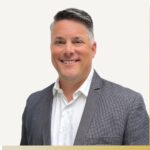
David Lamattina
President & CEO
About Dave Lamattina
Dave Lamattina is the founder and CEO of Arrowpoint Properties, a vertically integrated multifamily owner-operator based in Lawrence, Massachusetts. He has been acquiring and operating multifamily assets in the Merrimack Valley for over 22 years, with 1,100+ units acquired and exited and a current portfolio of approximately 850 units valued at around $230 million. Arrowpoint has completed 26 syndications with an average net IRR of 32% and a 2.50x equity multiple.